 Skip to content
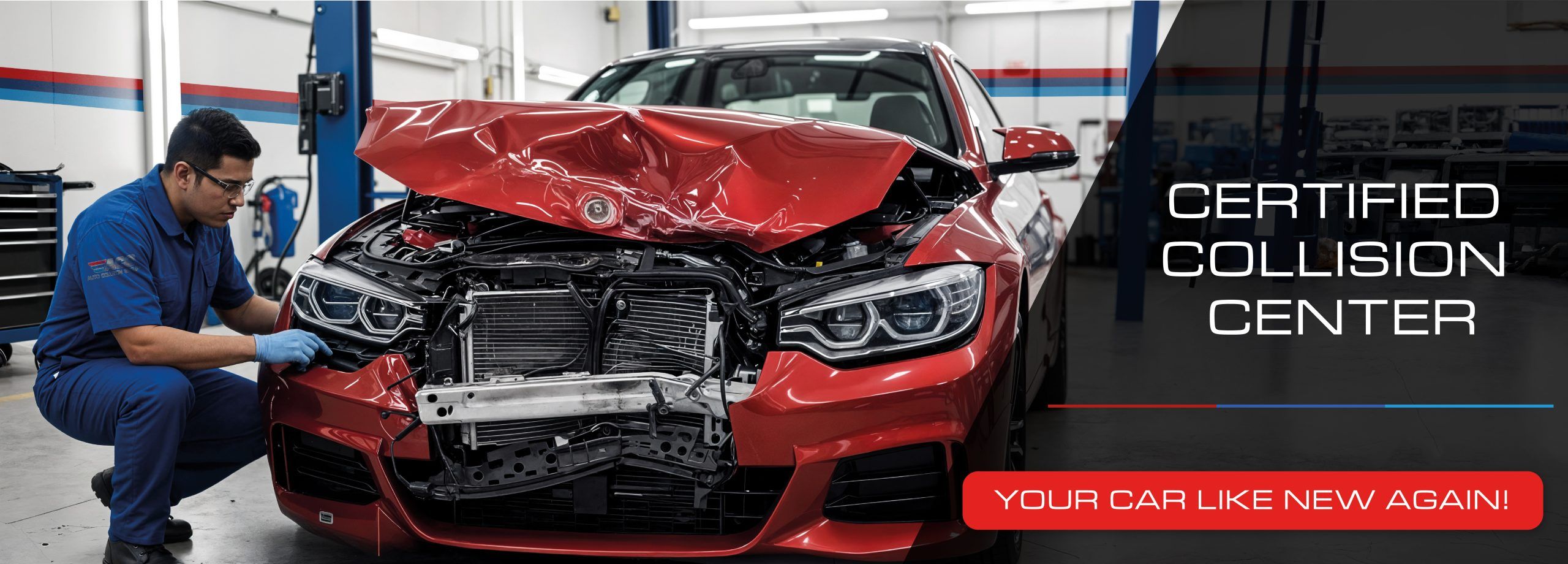
CERTIFIED COLLISION CENTER
“`html OEM parts auto body repair in California refers to the use of Original Equipment Manufacturer components — parts made by your vehicle’s own manufacturer to factory-exact specifications — rather than cheaper, third-party aftermarket alternatives. Auto Collision Group, headquartered in Whittier, CA, uses OEM parts exclusively across all 13 of its California locations, backed by 34+ manufacturer certifications — the largest certified collision repair network in the state. Their guiding principle: “We Fight For You. Not The Insurance Company.”
Why OEM Parts Matter for Your Vehicle Repair
What Are OEM Parts in Auto Body Repair?
OEM parts in auto body repair are components manufactured by your vehicle’s original equipment maker — not third-party suppliers. These parts are engineered to exact factory specifications and tested to meet the same safety standards your car met on the assembly line. When you need collision repairs in California, OEM parts guarantee fitment, durability, and performance that aftermarket alternatives simply cannot match.
The difference matters immediately. A Toyota fender sourced directly from Toyota is engineered for that specific model year, body style, and paint chemistry. An aftermarket fender might fit 80% correctly — creating alignment gaps, water leaks, and rust problems within 18 to 24 months. OEM parts used by certified California auto body shops ensure your repair lasts as long as your vehicle does.
Studies by the Automotive Body Parts Association and the Insurance Institute for Highway Safety have found that aftermarket crash parts can differ from OEM parts in thickness, tensile strength, and corrosion resistance — all factors that directly affect occupant safety in a subsequent collision. For high-voltage vehicles like Tesla and Lucid, using non-OEM parts can compromise battery containment systems and void manufacturer warranties entirely.

OEM vs. Aftermarket Parts: A Direct Comparison
Insurance companies routinely push for aftermarket or recycled parts because they cost 20–50% less than OEM equivalents. That savings benefits the insurer — not you, the vehicle owner. Here is a direct comparison of what each part type delivers:
| Factor | OEM Parts | Aftermarket Parts |
|---|---|---|
| Fitment Precision | 100% factory spec | Variable; often requires modification |
| Safety Testing | Manufacturer crash-tested | Third-party tested or untested |
| Corrosion Resistance | Factory-grade coatings | May rust within 2–3 years |
| Warranty Impact | Preserves manufacturer warranty | Can void manufacturer warranty |
| Resale Value | Maintains vehicle value | Can reduce resale value by 5–15% |
Why Insurance Companies Prefer Aftermarket — And Why You Shouldn’t
Under California law (California Insurance Code Section 758.5), insurers are required to disclose when they specify non-OEM parts in a repair estimate — but they are not prohibited from doing so. This means your insurer may approve a repair using aftermarket parts unless you or your repair shop explicitly fights back. Auto Collision Group’s certified repair advisors negotiate directly with all major insurance carriers — including State Farm, Geico, Allstate, Progressive, Farmers, USAA, AAA, Mercury, 21st Century, and Nationwide — to secure OEM part approvals on your behalf.
In 2023, the California Department of Insurance received over 3,400 complaints related to claim disputes involving non-OEM parts substitution. Consumers who chose a shop with certified manufacturer status — meaning the automaker specifically authorized that shop to repair their vehicles — were significantly more likely to receive OEM parts approvals without out-of-pocket supplemental costs.
“According to Auto Collision Group’s certified repair team: ‘Every manufacturer certification we hold — all 34 of them — comes with a specific requirement that we use only OEM parts in every repair. This isn’t a preference or a marketing claim. It is a contractual obligation we have with each automaker, from Toyota and Honda to Tesla, BMW, Porsche, and Maserati. When an insurance company pushes for aftermarket parts on a certified vehicle, we push back — every single time. Our customer’s safety and their vehicle’s structural integrity are non-negotiable.'”
OEM Parts and Manufacturer Certifications: Why They Go Together
Manufacturer certifications are not cosmetic badges — they are earned through rigorous audits of a shop’s equipment, technician training, and parts sourcing practices. A Tesla-certified collision center, for example, must use Tesla-sourced parts, follow Tesla’s specific repair procedures, and employ technicians who have completed Tesla’s proprietary training curriculum. The same applies across all 34 brands that Auto Collision Group is certified to repair.
Auto Collision Group holds certified repair status with the following 34+ manufacturers: Tesla, BMW, Maserati, Mercedes-Benz, Audi, Porsche, Lucid, Jaguar, Land Rover, Infiniti, Acura, Honda, Toyota, Nissan, Hyundai, Kia, Ford, Chevrolet, GMC, Buick, Cadillac, Dodge, Ram, Jeep, Chrysler, Subaru, Volkswagen, Volvo, Mini, Alfa Romeo, Fiat, Fisker, VinFast, and Hummer — making it the most certified collision repair group in California.
For luxury and electric vehicle owners specifically, choosing a non-certified shop risks permanent damage to advanced driver-assistance systems (ADAS), battery management systems, and aluminum structural components that require specialized repair tools costing upward of $150,000 — tools that only certified shops are required to own and maintain.