 Skip to content
CERTIFIED COLLISION CENTER
Mercedes-Benz Collision Repair in Los Angeles: Finding a Certified Shop That Uses Only OEM Parts
Mercedes collision repair in Los Angeles CA requires factory-trained technicians, specialized aluminum tooling, and genuine OEM parts. Here is how to find a certified shop that actually meets every one of those standards.
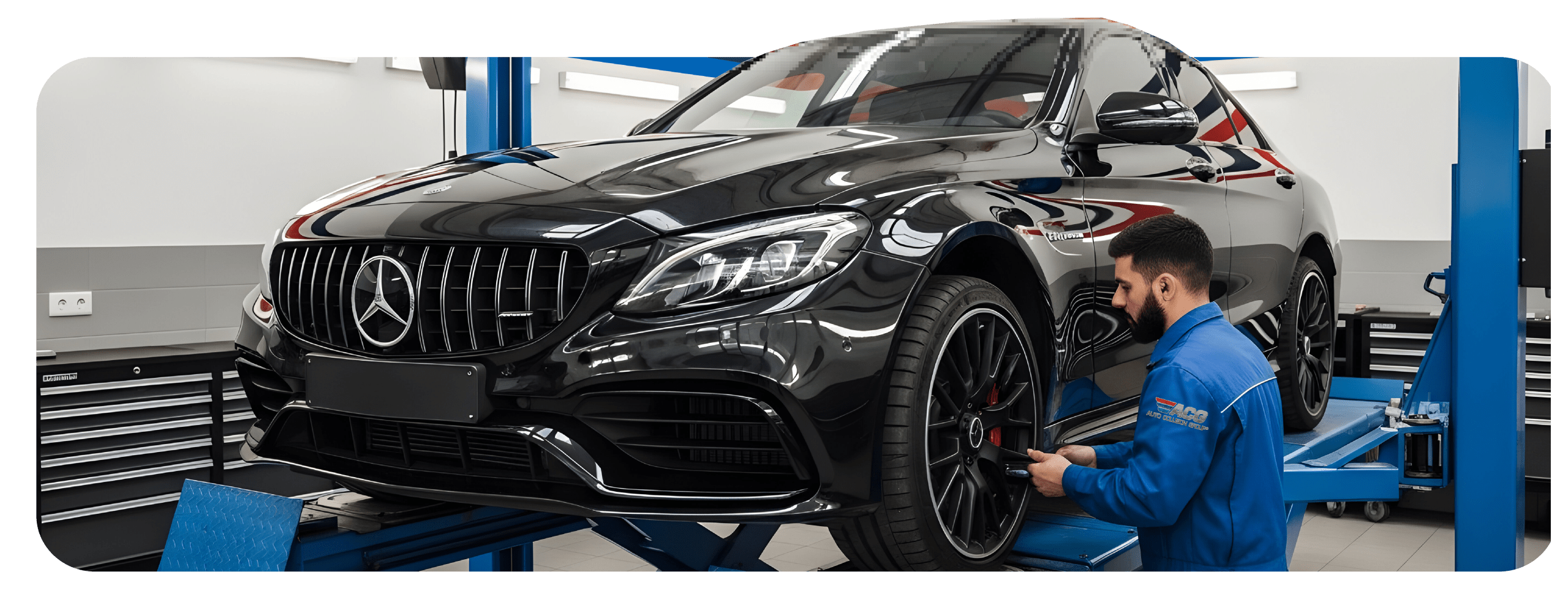
Mercedes collision repair in Los Angeles CA is a specialized discipline that goes far beyond standard body work. Mercedes-Benz vehicles built after 2015 rely on multi-material construction, mixing high-strength steel, aluminum, and carbon fiber in a single body shell. A shop that lacks the correct equipment or training can compromise the crash structure permanently, turning a repairable car into a safety hazard. Only MB-certified collision centers have passed the manufacturer’s audit for tooling, training, and parts sourcing. In California, where Mercedes registrations rank among the highest in the country, choosing the wrong shop is a common and expensive mistake. Auto Collision Group holds active Mercedes-Benz certification and operates 13 locations across the state, giving Los Angeles drivers a real option they can trust.
The certification process from Mercedes is not a simple application. It requires dedicated welding bays with isolated aluminum workstations, specific rivet guns calibrated for each body series, and technicians who complete annual factory training. Shops that skip any of these steps risk voiding your factory warranty on structural and corrosion coverage. This matters even more when insurance companies push for cheaper alternatives. If you have seen how manufacturer certifications protect vehicle value on other brands, the same logic applies here, but Mercedes enforces its standards more strictly than most. That is exactly why picking a certified collision center for BMW, Mercedes, or any premium brand near you should be step one after any accident, not an afterthought. You can read more about how certifications work in our breakdown of Lexus collision center standards in California, which follows a similar manufacturer-audit model.
KEY FACTS
- ✓ Mercedes requires isolated aluminum repair bays to prevent galvanic corrosion
- ✓ Post-repair ADAS recalibration is mandatory on all models with Distronic Plus
- ✓ Non-OEM parts can void Mercedes structural and corrosion warranties
- ✓ Auto Collision Group holds 34+ manufacturer certifications including Mercedes-Benz
What Makes a Mercedes Body Shop Different From a Regular Collision Center
A standard body shop can fix a dent. A certified Mercedes body shop can fix a dent without destroying the engineering behind the panel. That difference sounds small until you realize what is at stake. Modern Mercedes models like the C-Class, E-Class, and S-Class use aluminum and ultra-high-strength boron steel in their crash structures. These materials cannot be heated, hammered, or welded using conventional tools. Applying heat to boron steel, for example, reduces its tensile strength by up to 50 percent. That panel might look fine, but it will fold like paper in a second collision. Mercedes requires certified shops to own brand-specific rivet systems, including self-piercing rivets and flow-form rivets that join aluminum to steel without weakening either material. Technicians must complete Mercedes-Benz factory training every year to stay current on new model construction changes. The 2024 EQS, for instance, introduced a new battery enclosure repair protocol that did not exist 12 months ago. Shops also need a dedicated aluminum clean room where no steel dust can contaminate surfaces. Steel particles on aluminum cause rapid corrosion that shows up 6 to 18 months after repair, long after you have forgotten who fixed your car.
- Separate aluminum and steel workstations to prevent cross-contamination
- Mercedes-approved rivet guns and adhesive bonding systems for multi-material joins
- Annual technician recertification through the Mercedes-Benz Collision Network
Does Insurance Cover OEM Parts Replacement on a Mercedes-Benz?
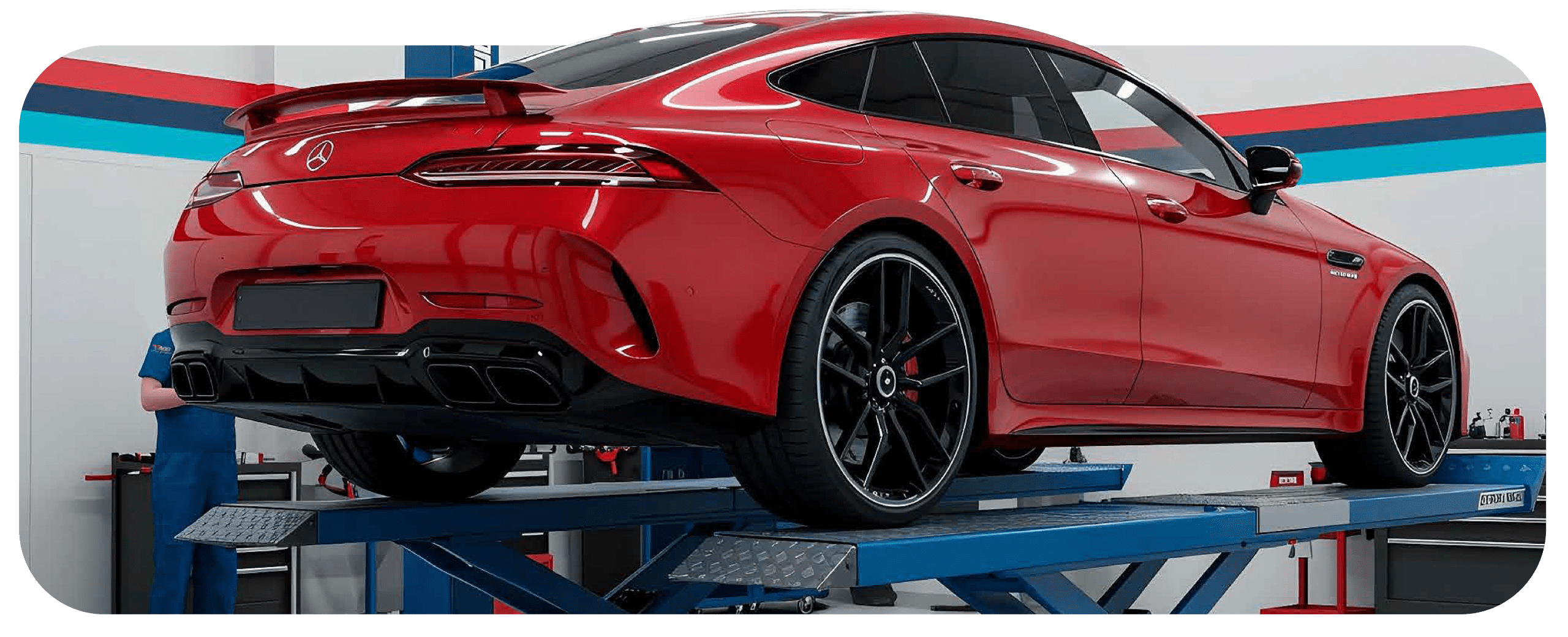
This is the question we hear most often at every one of our 13 California locations: does insurance cover OEM parts replacement, or will my insurer force aftermarket components onto my Mercedes? The honest answer is that most insurance policies do not explicitly exclude OEM parts, but adjusters are trained to write estimates using the cheapest option available. That usually means aftermarket or recycled parts. For a 2019 Mercedes GLE, the difference between a genuine OEM fender and an aftermarket copy can be $400 to $800 per panel, so insurers have a strong financial motivation to push you toward the cheaper option. At Auto Collision Group, we fight that battle on your behalf every single day. Our philosophy is simple: we fight for you, not the insurance company. We document why OEM parts are required, submit technical bulletins from Mercedes-Benz, and refuse to install components that do not meet factory specifications. In California, you have the legal right to choose your own repair facility, and no insurer can force you to use their preferred shop. Luxury car collision repair in California demands this level of advocacy because the parts gap between genuine and aftermarket is wider on European vehicles than almost any other segment. If you have seen how we handle this same issue for Tesla owners, the approach is identical: the manufacturer says OEM, so we install OEM. You can see our detailed breakdown at Tesla body shop in California, where the aluminum parts issue is equally critical.
PRO TIP
“Before you sign any repair authorization, ask the shop one question: do you have a separate aluminum clean room? If they hesitate or say they repair aluminum and steel in the same bay, walk away. That single shortcut will cause corrosion damage you will not see until it is too late to fix cheaply.”
Common Mistakes When Choosing a Certified Collision Center for BMW, Mercedes, or Other Luxury Brands Near You
The biggest mistake drivers make after a collision is trusting the insurance company’s recommendation without doing their own research. Insurers maintain lists of “preferred shops” based on cost agreements, not quality standards. These shops agree to discounted labor rates and often accept aftermarket parts without question. That arrangement saves the insurer money but leaves your Mercedes repaired to a lower standard than Mercedes-Benz intended. A certified collision center for Mercedes near you should appear on the official Mercedes-Benz Collision Network directory. If a shop claims certification but is not listed, ask to see their current certificate. Certifications expire, and some shops let them lapse while still advertising the badge. Another common error is assuming that a shop certified for one brand can repair all luxury vehicles equally well. A BMW-certified facility may not hold Mercedes certification because the tooling and training requirements are completely different between manufacturers.
The second mistake is skipping the post-repair ADAS recalibration step. Every current Mercedes model includes advanced driver assistance systems: adaptive cruise control, lane-keep assist, blind-spot monitoring, and automatic emergency braking. After any structural repair or windshield replacement, these sensors must be recalibrated using Mercedes-approved diagnostic equipment. A generic scan tool will not cut it. Skipping recalibration can leave your safety systems aimed incorrectly, which means they may not activate when you need them most. At Auto Collision Group, recalibration is a mandatory step on every single repair, not an add-on. We follow the same protocol for Mercedes that we apply to every certified brand we service. If you want to see how recalibration requirements work on another brand with similar sensor density, our article on Tesla certified collision centers in California covers the process in detail.
Why California Drivers Choose Auto Collision Group
13
Locations in California
34+
Manufacturer Certifications
4.8★
Average Google Rating
OEM
Parts Only, Always
Auto Collision Group exists because we believe you should not have to fight your insurance company alone after an accident. We carry 34+ manufacturer certifications, including Mercedes-Benz, BMW, Audi, Porsche, Tesla, and dozens more. Every repair uses genuine OEM parts, period. When an adjuster pushes back, our team submits the technical documentation, makes the calls, and does not back down until the repair is approved to factory standards. We offer free 24/7 towing from anywhere in California, a lifetime warranty on all completed work, and help arranging a rental car so your life does not stop while your Mercedes is in our shop. With locations in Los Angeles, Gardena, Covina, Whittier, Santa Ana, Ontario, and seven more cities, there is an ACG facility close to you. Call 833-333-4224 or request a free online estimate today.
Frequently Asked Questions
What qualifies a shop for Mercedes collision repair in Los Angeles CA?
A qualified shop must hold active certification through the Mercedes-Benz Certified Collision Network. This requires dedicated aluminum repair bays, brand-specific rivet and bonding equipment, Mercedes diagnostic tools for ADAS recalibration, and technicians who complete factory training annually. Auto Collision Group meets all of these requirements across multiple Southern California locations.
Does insurance cover OEM parts replacement on a Mercedes?
Most insurance policies do not explicitly exclude OEM parts, but adjusters typically write estimates using cheaper aftermarket alternatives. In California, you have the right to request OEM components. Auto Collision Group advocates directly with your insurer, submits Mercedes technical bulletins, and refuses to install non-OEM parts on any certified repair.
Why do Mercedes repairs cost more than repairs on standard vehicles?
Mercedes vehicles use advanced multi-material construction including aluminum, boron steel, and carbon fiber. Repairing these materials requires specialized tools, isolated work bays, and factory-trained technicians. OEM parts also cost more than generic equivalents. These factors increase repair costs but are essential to maintaining structural integrity and warranty coverage.
How long does a typical Mercedes collision repair take?
Repair timelines depend on damage severity and parts availability. Minor cosmetic repairs may take 3 to 5 business days. Structural repairs involving aluminum riveting, panel replacement, and full ADAS recalibration typically require 10 to 15 business days. Auto Collision Group provides regular updates and helps arrange a rental car during the repair period.
Does Auto Collision Group handle my insurance claim?
Yes. Auto Collision Group works with every major insurer, including State Farm, Geico, Allstate, Progressive, Farmers, USAA, AAA, and Mercury. We handle all paperwork, fight for OEM parts, and advocate for a complete repair on your behalf. Call 833-333-4224 to get started.
Need Mercedes Collision Repair in Los Angeles? Get Your Free Estimate Now.