 Skip to content
CERTIFIED COLLISION CENTER
Hyundai Certified Collision Repair: Why Your Hyundai Needs a Certified Body Shop
Your Hyundai is built with advanced high-strength steel, radar sensors, and EV battery systems that most body shops are not equipped to repair. Here is what hyundai certified collision repair actually means for your safety and your wallet.
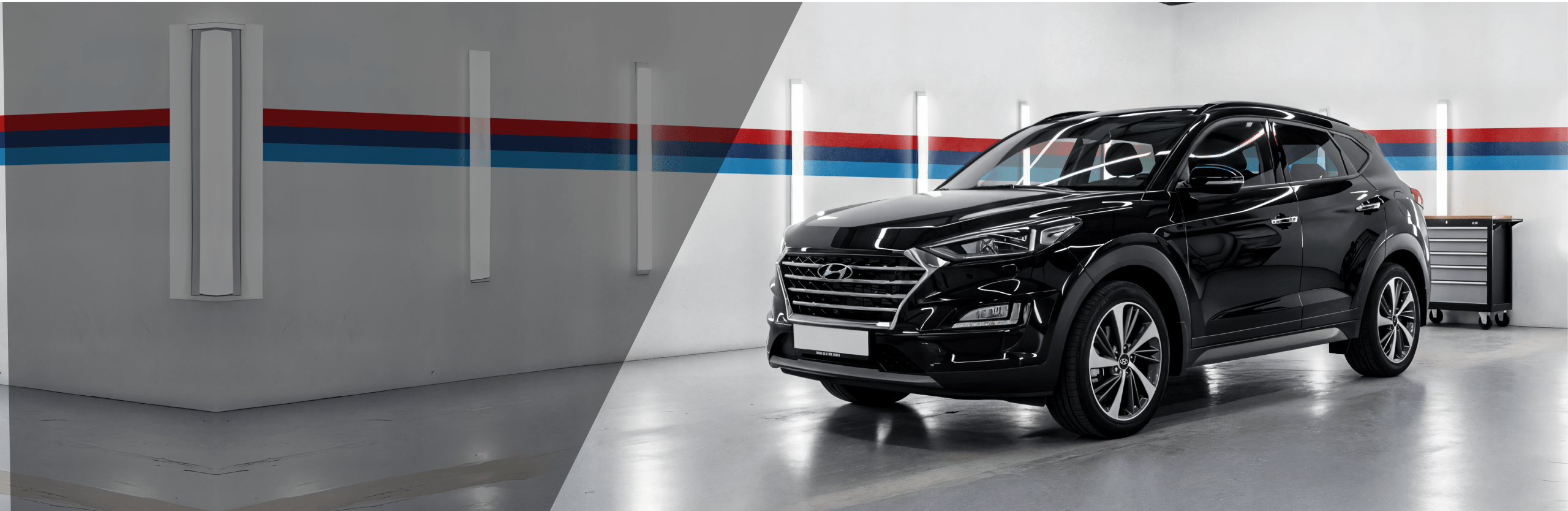
Hyundai certified collision repair is a manufacturer-backed program that ensures your vehicle gets repaired to the exact standards Hyundai set when it left the factory. This is not a marketing badge. It means the shop has invested in Hyundai-specific welding equipment, training programs updated every model year, and access to OEM repair procedures that change with every structural redesign. In California, where Hyundai ranks among the top five best-selling brands, finding a certified shop is not optional if you want your car restored correctly. Over 60 percent of Hyundai’s current lineup uses advanced high-strength steel (AHSS) or ultra-high-strength steel in critical structural zones, and cutting or welding these materials incorrectly can reduce crash protection by up to 50 percent according to Hyundai’s own technical bulletins.
The reality is that Hyundai stopped being a “basic” brand years ago. The Ioniq 5, Ioniq 6, and upcoming Ioniq 7 sit on Hyundai’s E-GMP electric platform with 800-volt battery architecture, aluminum crash structures, and up to 34 individual ADAS sensors including cameras, radar modules, and ultrasonic units. A non-certified shop treating a 2024 Tucson like a 2010 Sonata creates real safety problems. This is the same reason we wrote about why Tesla owners need certified collision centers, and the principle applies directly to modern Hyundai vehicles.
KEY FACTS
- ✓ Hyundai uses AHSS in 60%+ of current models, requiring certified repair methods
- ✓ Ioniq 5 and Ioniq 6 carry 800-volt battery systems and aluminum subframes
- ✓ Incorrect ADAS recalibration can leave blind-spot monitors and auto-braking non-functional
- ✓ Auto Collision Group holds Hyundai certification across 13 California locations
What Makes Modern Hyundai Vehicles Different at the Auto Body Repair Shop
Walk into a non-certified auto body repair shop and ask how they handle hot-stamped boron steel. If you get a blank stare, walk out. Hyundai’s current platform, from the Elantra to the Santa Fe to the Ioniq lineup, uses a mix of mild steel, high-strength steel, ultra-high-strength steel, and hot-stamped boron steel in a single body structure. Each material has different heat sensitivity, welding requirements, and sectioning rules. Boron steel, for example, loses up to 50 percent of its tensile strength when exposed to heat above 400 degrees Celsius. A shop using traditional MIG welding on a boron steel B-pillar is essentially destroying the crash structure your family depends on. Hyundai’s repair procedures specify squeeze-type resistance spot welding (STRSW) for these joints, and that equipment alone costs over $30,000. Most independent shops do not own one. Beyond the steel, every 2022-and-newer Hyundai model includes Hyundai SmartSense, a suite of ADAS features that rely on forward-facing cameras, corner radar sensors, and ultrasonic parking sensors. After a collision, each of these systems needs static and dynamic recalibration using Hyundai’s GDS diagnostic tool. A generic scan tool misses manufacturer-specific codes roughly 40 percent of the time according to data from the Collision Industry Conference.
- Hot-stamped boron steel in A-pillars, B-pillars, and roof rails requires STRSW equipment
- Ioniq EV models need high-voltage battery disconnect procedures before any structural work begins
- SmartSense ADAS recalibration requires Hyundai GDS diagnostic hardware, not aftermarket scan tools
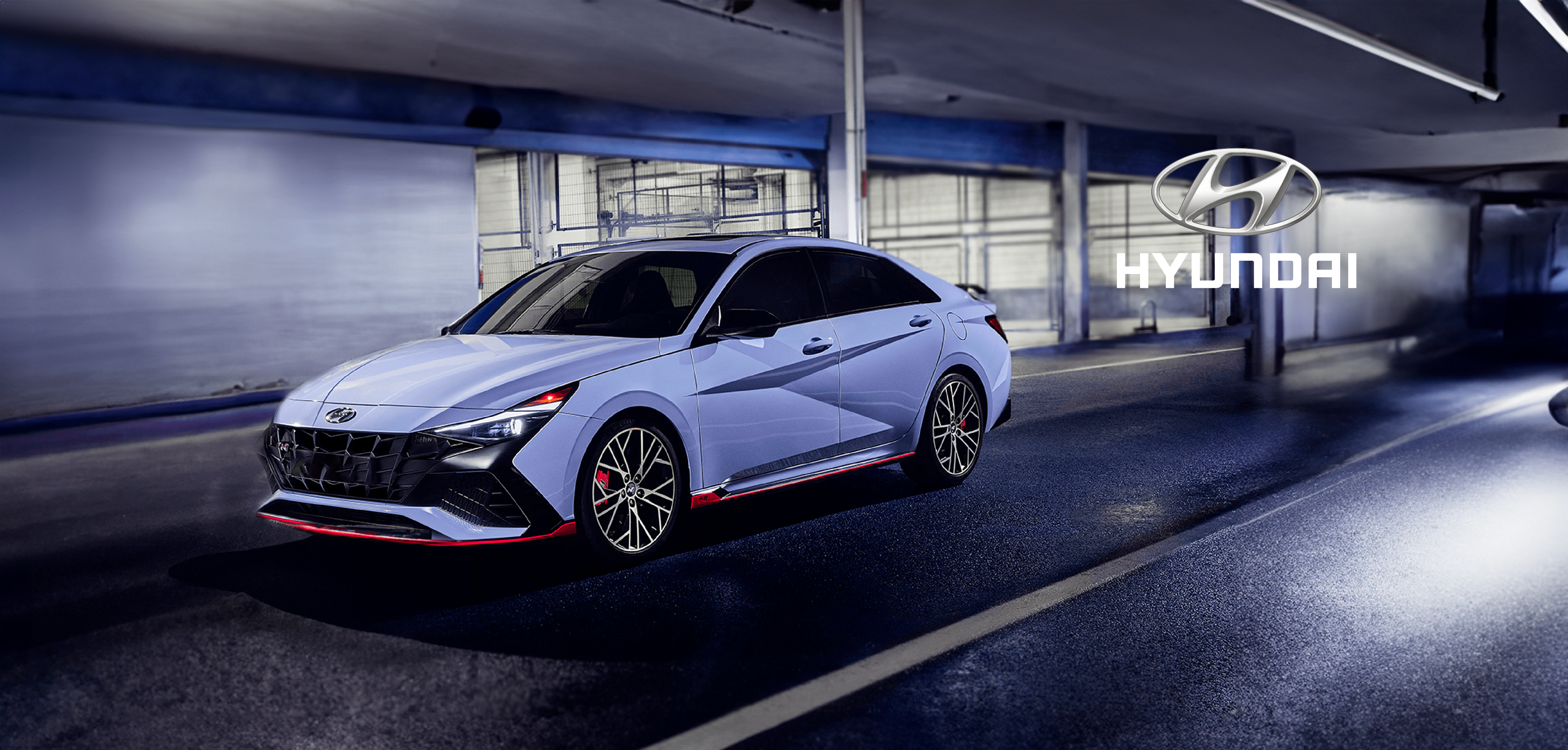
Hyundai Certified Collision Repair vs. a Regular Body Shop: The Real Differences
Hyundai certified collision repair is not just a sticker on the wall. To earn and maintain certification, a shop must meet Hyundai’s requirements for technician training (renewed annually), equipment inventory, and adherence to Hyundai’s online repair procedures through their HKMC Global Service Way portal. The shop must own or have direct access to Hyundai’s GDS diagnostic system, a dedicated aluminum repair area to prevent galvanic corrosion when working on Ioniq models, and specific rivet guns and adhesive bonding systems for mixed-material joining. At Auto Collision Group, we maintain these certifications across all 13 California locations, which means whether your accident happens in Whittier, Fresno, or El Cajon, the same certified repair process applies to your Hyundai. A regular body shop might give you a lower car repair estimate upfront, but that estimate often reflects shortcuts. They might use aftermarket crash parts that do not match Hyundai’s thickness specifications. They might skip ADAS recalibration entirely, or attempt it with a generic tool that cannot access Hyundai-specific modules. They might weld where Hyundai says to rivet, or heat-straighten a rail that Hyundai says to replace. We have seen all of these shortcuts when customers bring us vehicles for re-repair after a non-certified shop made things worse. This is the same principle we explain in our guide on why certified repairs are the only repairs worth getting; it applies to every modern vehicle brand, including Hyundai.
PRO TIP
“If your insurance company steers you to a ‘preferred shop’ that is not Hyundai certified, know this: California law gives you the absolute right to choose your own body shop. Do not let an adjuster pick your shop for you. Pick the shop that has the training and equipment your car actually requires.”
How to Get a Trustworthy Car Repair Estimate for Your Hyundai
Getting an accurate car repair estimate starts with choosing the right shop before you request numbers. A certified shop writes estimates based on Hyundai’s actual repair procedures, which include the correct labor operations, the correct joining methods, and the correct parts. A non-certified shop often writes estimates based on what their insurance DRP agreement allows, not what your car needs. That is a critical difference. When you request an estimate from Auto Collision Group, our estimators pull Hyundai’s published procedures for your specific model and year. We document every operation, from corrosion protection on exposed welds to post-repair ADAS calibration scans. We also photograph damage thoroughly so there are no surprises mid-repair. Your estimate should list OEM parts by Hyundai part number, not generic aftermarket descriptions.
One thing California drivers often overlook is what happens during the repair when you need a vehicle to drive. If your policy includes rental coverage, or if the other driver was at fault, you should have a rental car lined up before repairs start. Our team handles that coordination directly. For a full breakdown of how rental coverage works during collision repair, check out our guide on rental car assistance during body shop repair. It covers what your policy likely includes and how to avoid paying out of pocket. We also offer free 24/7 towing from anywhere in California directly to the nearest ACG location, so you do not have to worry about getting your damaged Hyundai to the shop. Call us at 833-333-4224 and we will coordinate everything from tow to completion.
Why California Drivers Choose Auto Collision Group
13
Locations in California
34+
Manufacturer Certifications
4.8★
Average Google Rating
OEM
Parts Only — Always
Auto Collision Group holds 34+ manufacturer certifications, including Hyundai, Tesla, BMW, Mercedes-Benz, Porsche, and Kia, making us one of the most certified collision repair networks in California. Our philosophy is simple: We Fight For You, Not The Insurance Company. That means we go to bat with adjusters to get OEM parts approved on every repair, never substituting cheap aftermarket panels that do not fit correctly or protect you the same way. We use OEM parts exclusively on every job, no exceptions. Every repair comes with a lifetime warranty. We offer free towing 24 hours a day, seven days a week, from any location in California. With 13 shops from El Cajon to Fresno to Whittier, there is an ACG location near you. Call 833-333-4224 or request a free online estimate to get started today.
Frequently Asked Questions
What does hyundai certified collision repair actually include?
Hyundai certified collision repair means the shop follows Hyundai’s published repair procedures for your exact model and year. This includes using the correct welding methods for advanced high-strength steel, performing ADAS recalibration with Hyundai GDS diagnostic equipment, and installing genuine OEM parts. Certification also requires annual technician training and facility audits by Hyundai’s certification partner.
Will my insurance cover the cost of a certified body shop?
Yes. California Insurance Code Section 758.5 guarantees your right to choose any auto collision repair shop you want, regardless of your insurer’s preferred network. Your insurance company must pay for a proper repair. At ACG, we negotiate directly with your adjuster to ensure OEM parts and correct procedures are approved and covered by your policy.
Why does Auto Collision Group only use OEM parts on Hyundai repairs?
Aftermarket crash parts are reverse-engineered copies that often differ in material thickness, mounting points, and crash performance. On a Hyundai built with advanced steel grades and specific crumple-zone geometry, using a panel that is even slightly off-spec can change how the car absorbs energy in a future collision. ACG uses OEM parts exclusively because your safety is not a place to cut costs.
How long does a typical Hyundai collision repair take?
Repair timelines depend on damage severity and parts availability. A minor fender repair might take five to seven business days. Structural repairs on models with AHSS or EV platforms like the Ioniq 5 can take two to four weeks due to specialized procedures and calibration requirements. ACG provides regular updates throughout the process and helps coordinate rental vehicles so you stay mobile.
Does Auto Collision Group handle my insurance claim?
Yes. Auto Collision Group works with every major insurer, including State Farm, Geico, Allstate, Progressive, Farmers, USAA, AAA, and Mercury. We handle all paperwork, fight for OEM parts, and advocate for a complete repair on your behalf. Call 833-333-4224 to get started.