 Skip to content
CERTIFIED COLLISION CENTER
BMW & Mercedes Certified Collision Centers in California: What Dual Certification Really Means for Your Repair
Finding a certified collision center for BMW and Mercedes near me is hard enough. Finding one shop that holds both certifications, plus 32 others, changes the entire repair equation.
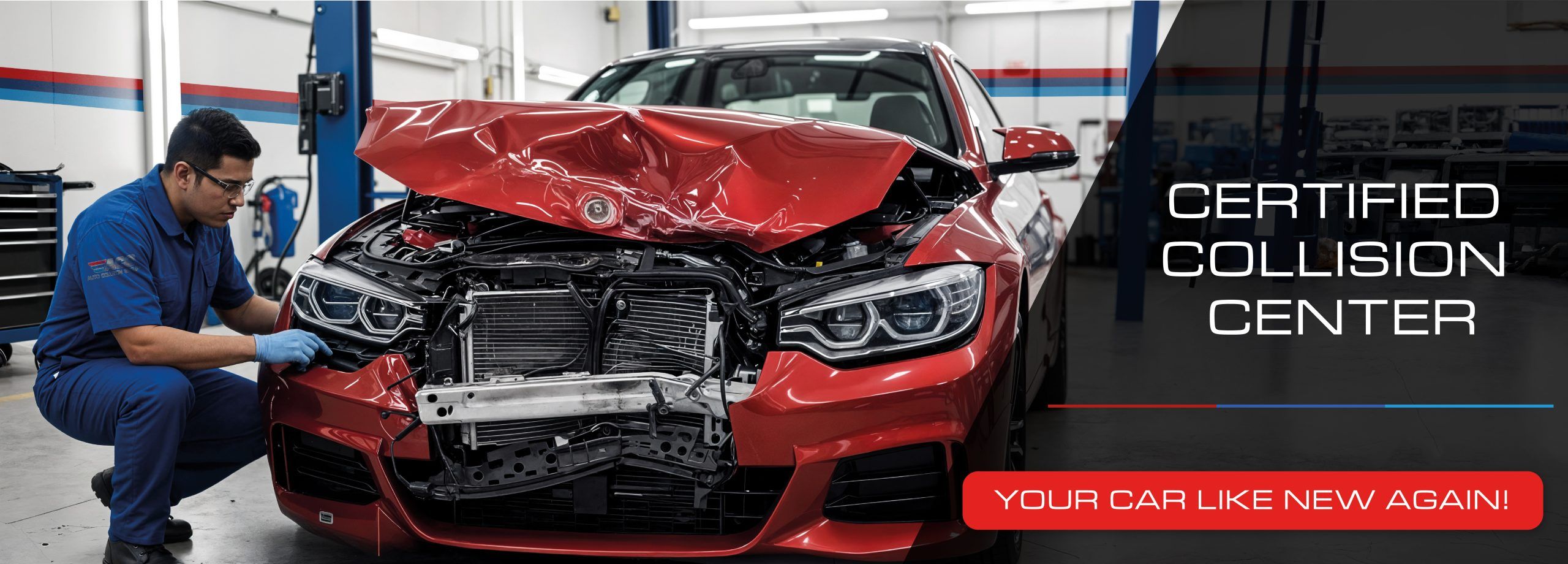
A certified collision center for BMW and Mercedes near me is a body shop that has passed the factory inspection process for both manufacturers and maintains separate sets of equipment, training credentials, and repair procedures for each brand. That distinction matters more than most drivers realize. BMW and Mercedes each require different welding systems, different measuring equipment, and different adhesive bonding protocols. A shop certified by one brand is not automatically qualified to repair the other. In California, where luxury vehicle registrations rank among the highest in the nation, the gap between a certified repair and a generic one can mean thousands of dollars in lost resale value and compromised safety systems.
The real challenge is that both BMW and Mercedes limit the number of shops they certify. Each brand audits facilities annually, checks that technicians maintain current training hours, and verifies that the shop stocks or has direct access to OEM parts. Dual certification means a shop has passed two separate, demanding qualification programs and continues to invest in both. That kind of commitment is rare, especially from independent collision networks. The same principle applies to other specialty vehicles; if you have read about Tesla certified collision repair in California, you already know how much the right shop matters.
KEY FACTS
- ✓ BMW and Mercedes require separate tooling, training, and facility standards
- ✓ Fewer than 5% of U.S. body shops hold even one luxury manufacturer certification
- ✓ Non-certified repairs can void active warranty coverage on structural components
- ✓ Auto Collision Group holds 34+ manufacturer certifications, including both BMW and Mercedes-Benz
What BMW Certified Collision Repair in California Actually Requires
BMW does not hand out certifications casually. The BMW Certified Collision Repair Center program evaluates shops across dozens of criteria before granting approval. Technicians must complete training through BMW’s own curriculum, which covers everything from aluminum structural repair to advanced driver-assistance system (ADAS) recalibration. The 3 Series, 5 Series, X models, and the i4/iX electric lineup each have unique body construction methods, and BMW expects certified shops to know every single one. On the equipment side, a BMW certified shop must own brand-approved spot welders, rivet guns, and a three-dimensional measuring system that maps the vehicle frame against factory specifications down to the millimeter. According to BMW’s own program documentation, shops invest between $150,000 and $400,000 in tooling just to meet initial approval. Annual re-certification audits confirm that equipment is maintained, software is current, and technicians have logged the required continuing education hours. Shops that fall behind lose certification, period. That investment is one reason why so few body shops in California carry the BMW stamp.
- Dedicated aluminum repair zone with separate tools to prevent galvanic corrosion
- Factory-level diagnostic scanning before and after every structural repair
- Direct access to BMW repair procedures updated in real time by the manufacturer
What Mercedes-Benz Certification Demands (and How It Differs from BMW)
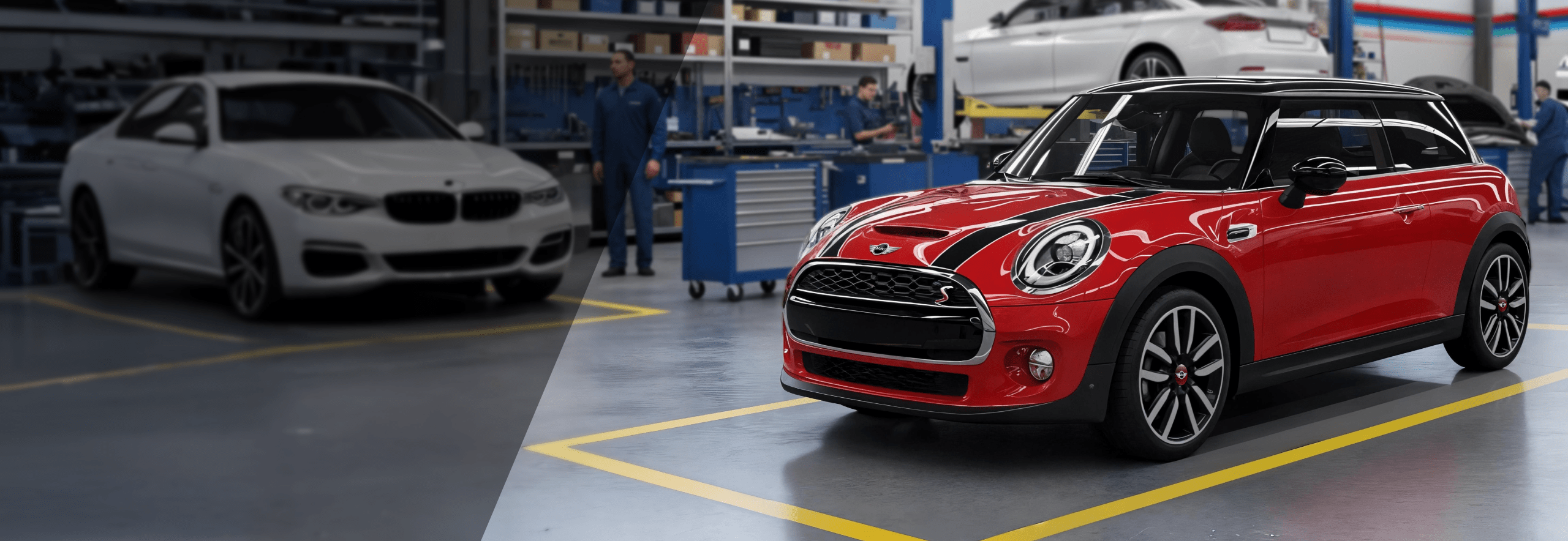
Mercedes-Benz runs its own collision repair network under the Mercedes-Benz Certified Collision Center program. The requirements overlap with BMW in some areas, like mandating OEM repair procedures and proper measuring systems, but they diverge sharply in others. Mercedes places heavy emphasis on adhesive bonding technology. Many Mercedes models, particularly the E-Class, S-Class, and EQS, use multi-material construction that bonds aluminum to high-strength steel using structural adhesives. That bonding process requires climate-controlled application, specific surface preparation, and cure-time monitoring that most generic body shops simply cannot perform. Mercedes also requires certified shops to maintain a dedicated clean room environment for certain panel replacements and to use the brand’s proprietary WIS (Workshop Information System) for every repair plan. Training is handled through Mercedes-Benz internal programs, and technicians must recertify on a schedule that keeps pace with new model releases. A Mercedes body shop that earned certification in 2020 but skipped training on the EQS platform would fail its next audit. At Auto Collision Group, our technicians stay current on both BMW and Mercedes programs simultaneously. That dual commitment is the same philosophy we bring to aluminum body repair for Tesla and other EV brands, where the stakes are equally high.
PRO TIP
“Before you let any shop touch your BMW or Mercedes, ask one question: Can you show me your current certification letter from the manufacturer? If they hesitate, hedge, or say ‘we follow OEM procedures,’ that means they are not certified. Walk away.”
Why Dual-Certified Shops Are Rare and How to Verify Certification Yourself
Running one manufacturer certification program is expensive. Running two at the same time doubles the investment in tooling, doubles the training hours, and doubles the audit pressure. That is exactly why finding a certified collision center for BMW and Mercedes near me is so difficult for California drivers. Most independent shops pick one luxury brand and stop there because the capital outlay does not make financial sense unless you have the volume and infrastructure to support it. A dual-certified shop needs separate welding equipment for each brand in many cases, because BMW and Mercedes approve different machines. It also needs technicians cross-trained in both repair planning systems, since BMW uses ISTA diagnostics while Mercedes relies on XENTRY. The overlap in skills is real, but the specific procedures are different enough that generalist training will not pass either audit.
If you want to verify a shop’s certification status yourself, both manufacturers maintain online directories. BMW’s Certified Collision Repair Center Locator is available on bmwusa.com, and Mercedes-Benz lists approved shops through mbusa.com under the collision resources section. Cross-check both lists before making your appointment. Also look at whether the shop uses only OEM parts, because both BMW and Mercedes require them in their certified repair programs. Shops that substitute aftermarket or salvage parts to satisfy an insurance adjuster are violating the terms of their certification. At ACG, we fight insurance companies on this point every day. Our stance on OEM-only parts is non-negotiable, and we explain exactly why in our guide on OEM vs aftermarket parts in collision repair.
Why California Drivers Choose Auto Collision Group
13
Locations in California
34+
Manufacturer Certifications
4.8★
Average Google Rating
OEM
Parts Only, Always
Auto Collision Group operates 13 locations across California, from Los Angeles and Whittier to Fresno, Bakersfield, and El Cajon. We hold 34+ manufacturer certifications, including BMW, Mercedes-Benz, Tesla, Porsche, Audi, and dozens more. Every repair uses OEM parts exclusively, and we will fight your insurance company to make sure that happens. We are not a DRP shop that answers to insurers first. Our philosophy is simple: We Fight For You. Not The Insurance Company. Every job comes with a lifetime warranty on all repair work, free 24/7 towing from anywhere in California, and help arranging a rental car while your vehicle is in the shop. If you have been searching for a certified collision center for BMW and Mercedes near me, you just found it. Call 833-333-4224 or request your free online estimate today.
Frequently Asked Questions
What is a certified collision center for BMW and Mercedes near me?
A certified collision center for BMW and Mercedes is a body shop that has been individually approved by both manufacturers to perform structural and cosmetic repairs on their vehicles. Certification requires brand-specific tooling, factory-trained technicians, OEM parts usage, and annual audits. Auto Collision Group holds both certifications across its 13 California locations.
Will my insurance cover repairs at a BMW or Mercedes certified collision center?
Yes. California law gives you the right to choose any body shop for your collision repair, regardless of what your insurance company recommends. Your insurer must pay for a proper repair at a certified facility. ACG works directly with all major insurers and handles the claims process so you do not have to negotiate on your own.
Why does ACG only use OEM parts for BMW and Mercedes repairs?
Both BMW and Mercedes require OEM parts as a condition of their certified repair programs. Aftermarket parts do not match factory tolerances for fit, corrosion resistance, or crash performance. Auto Collision Group uses OEM parts on every repair, every time, and we push back on insurance adjusters who try to substitute cheaper alternatives.
How long does a certified BMW or Mercedes collision repair take?
Repair timelines depend on the extent of damage and parts availability. Minor cosmetic repairs may take 3 to 5 business days. Major structural work on a BMW or Mercedes can take 2 to 4 weeks, especially when aluminum components or ADAS recalibration are involved. ACG provides status updates throughout the process and assists with rental car arrangements.
Does Auto Collision Group handle my insurance claim?
Yes. Auto Collision Group works with every major insurer, including State Farm, Geico, Allstate, Progressive, Farmers, USAA, AAA, and Mercury. We handle all paperwork, fight for OEM parts, and advocate for a complete repair on your behalf. Call 833-333-4224 to get started.
Your BMW or Mercedes Deserves a Certified Collision Center. Schedule Your Free Estimate Now.
Free estimate | 24/7 towing | Lifetime warranty | 13 California locations