 Skip to content
CERTIFIED COLLISION CENTER
BMW Certified Collision Repair in Los Angeles: Why Factory Certification Matters for Your BMW
Your BMW was engineered with aluminum, carbon fiber, and advanced driver-assistance systems that most body shops simply cannot repair correctly. Here is what factory certification actually means for your car and your wallet.
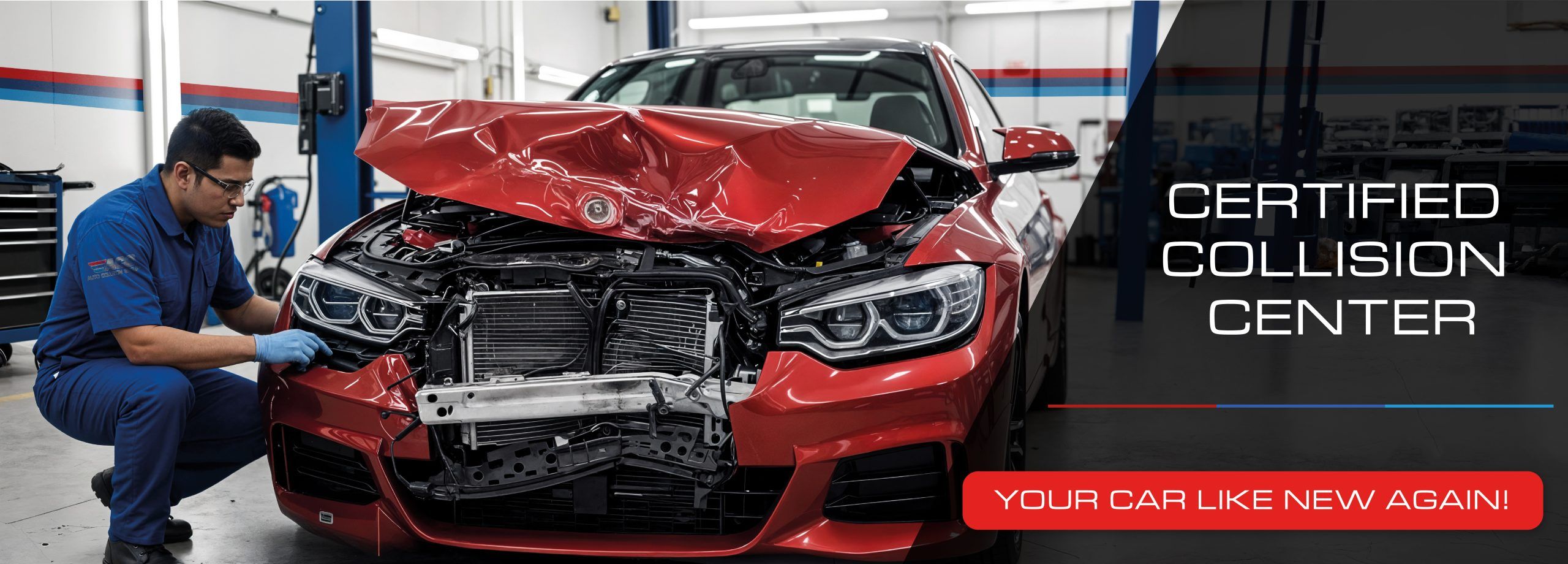
BMW certified collision repair in Los Angeles is a factory-authorized repair process performed by technicians who have completed BMW-specific training, use only genuine OEM parts, and operate equipment that meets BMW AG’s strict standards. This is not a marketing label. It is a measurable difference in how your car drives, how it protects you in a second collision, and how much it holds in resale value. BMW spends over $6 billion annually on research and development, and every structural decision, from the grade of aluminum in the chassis to the adhesive bonding methods, is engineered as a system. When a non-certified shop substitutes generic parts or skips a calibration step, that system breaks down. In California, where BMWs account for a significant share of luxury vehicle registrations, finding a certified collision center is not optional. It is the only way to protect your investment.
The real problem is that most drivers do not know the difference until it is too late. An insurer might steer you toward a preferred shop that charges less, but that shop may lack the welders, the rivet guns, or the scan tools that BMW requires. The result can be panels that corrode within a year, sensors that throw phantom warnings on the dash, or a frame that crumples differently in the next impact. Auto Collision Group holds BMW factory certification across all 13 California locations, and we have seen the aftermath of bad repairs walk through our doors weekly. If you own a BMW in Los Angeles or anywhere in California, this guide will show you exactly what to look for and what to avoid. The same attention to detail applies whether you drive a BMW, a Tesla, or any other vehicle that demands specialized care.
KEY FACTS
- ✓ BMW uses 7 types of steel plus aluminum and carbon fiber in a single model
- ✓ Non-OEM parts can reduce crash protection by up to 22% (IIHS data)
- ✓ ADAS recalibration is required after nearly every collision repair on modern BMWs
- ✓ Auto Collision Group holds 34+ manufacturer certifications, including BMW, across 13 California shops
Why BMW Aluminum and Carbon Fiber Structures Demand Specialized Repair
Walk into a typical BMW body shop and ask to see their aluminum clean room. If they look confused, walk out. Starting with the 5 Series and expanding into the 7 Series, X5, and beyond, BMW has moved aggressively toward multi-material construction that blends high-strength steel, aluminum alloys, and carbon-fiber-reinforced plastic (CFRP). The i3 and i8 were built almost entirely around a CFRP passenger cell. The current 7 Series uses a carbon fiber core structure that reduces weight by nearly 130 kilograms compared to a steel-only design. These materials cannot be repaired with the same tools or techniques used on mild steel. Aluminum, for instance, has a memory that steel does not. You cannot simply hammer it back into shape. It must be heated to precise temperatures, typically between 200 and 300 degrees Celsius, or replaced entirely using factory-specified rivets and structural adhesives. If aluminum dust contaminates a steel panel during repair, galvanic corrosion begins almost immediately. That is why BMW requires a dedicated aluminum repair area with separate tools, separate ventilation, and separate storage. Carbon fiber presents a different challenge. You cannot weld it. You cannot heat-shrink it. A cracked CFRP component must be replaced, period. Any shop that claims to “repair” structural carbon fiber on a BMW is cutting corners that put your safety at risk. BMW collision repair in Los Angeles CA must follow these material-specific protocols to restore the car to its pre-accident condition.
- Aluminum panels require dedicated tooling and a contamination-free workspace
- Carbon fiber structural components must be replaced, not patched or filled
- Mixed-material joining methods include self-piercing rivets, flow-drill screws, and structural adhesives that cure at specific temperatures
OEM Parts vs. Aftermarket: The Hidden Risk That Destroys BMW Resale Value
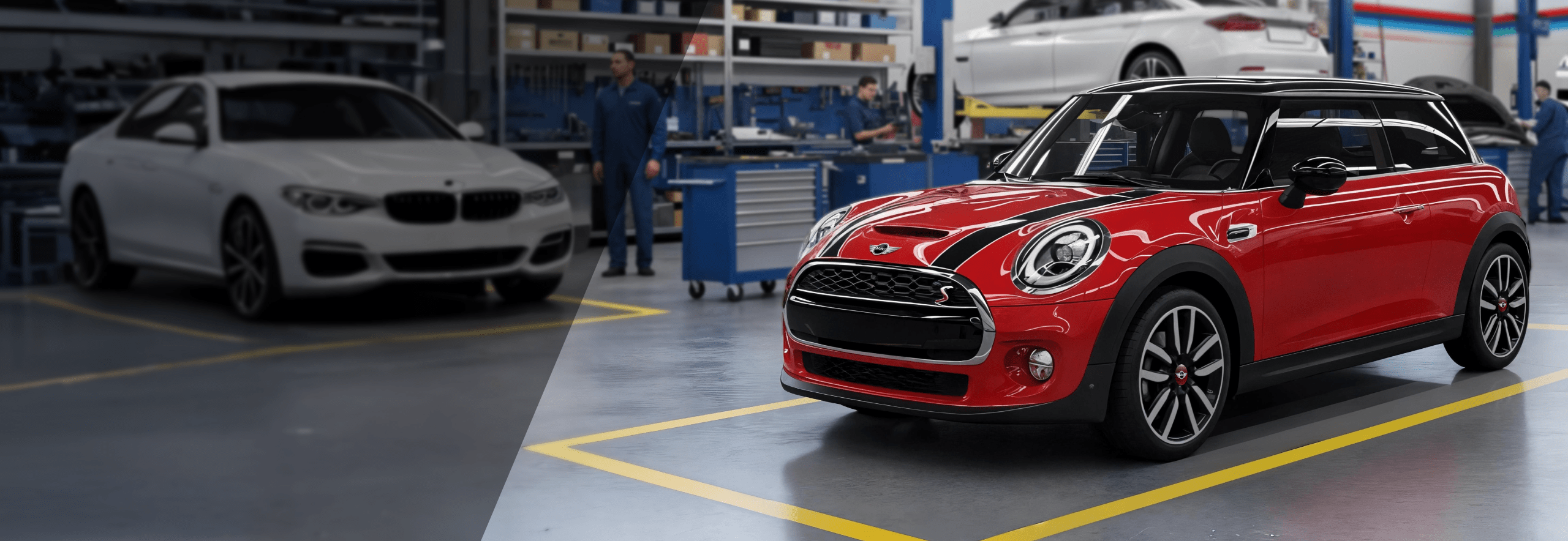
Insurance adjusters love aftermarket parts because they cost 30 to 50 percent less than OEM. But here is what they will not tell you: aftermarket BMW parts do not undergo crash testing, they often fit poorly, and they can void your factory corrosion warranty. A genuine BMW fender is stamped from dual-phase steel with precise crumple zones designed to absorb energy in a specific pattern. An aftermarket copy might look similar on the outside, but its metallurgy, thickness, and weld points are different. That difference changes how force moves through the structure in a collision. At Auto Collision Group, we use OEM parts exclusively on every repair. No exceptions. When an insurer pushes back, we fight for you. Our philosophy is simple: we fight for you, not the insurance company. That means submitting documentation, providing BMW technical bulletins, and negotiating until the insurer approves the correct part. This same commitment applies whether we are repairing a BMW, a Volvo, or a Volkswagen. Every manufacturer designs parts as a system, and substituting one component compromises the whole. For luxury car collision repair in California, the parts question is not about preference. It is about safety, warranty, and long-term value. Vehicles repaired with OEM parts retain 8 to 14 percent more resale value compared to those repaired with aftermarket components, according to industry trade data.
PRO TIP
“Before you sign any repair authorization, ask the shop for their BMW certification number and verify it on BMW’s official collision repair locator. If they cannot provide it, your car will not be repaired to factory specs, no matter what they promise.”
ADAS Calibration After a BMW Collision: What Most Shops Get Wrong
Modern BMWs carry between 12 and 20 sensors, cameras, and radar modules that control lane departure warning, automatic emergency braking, adaptive cruise control, parking assist, and blind-spot monitoring. These are collectively known as Advanced Driver-Assistance Systems (ADAS). After a collision, even a minor fender impact at 5 mph, these sensors can shift by fractions of a degree. A forward-facing camera that is off by just one degree can misread the road by several feet at highway speed. BMW requires static and dynamic calibration after bumper replacement, windshield replacement, wheel alignment changes, and any structural repair. Static calibration uses a factory-spec target board positioned at exact distances from the vehicle. Dynamic calibration requires driving a specific route at specific speeds. A shop without BMW diagnostic software, specifically ISTA (Integrated Service Technical Application), cannot perform these procedures correctly. Generic scan tools read basic fault codes, but they cannot access the deep module-level programming that BMW’s system requires.
At Auto Collision Group, BMW certified collision repair includes full ADAS recalibration as a standard part of every job. We do not treat it as an add-on or an afterthought. Every vehicle gets a pre-repair and post-repair diagnostic scan, and we document both to provide proof that all systems are functioning within BMW specifications. This matters because an improperly calibrated ADAS can fail silently. You will not see a warning light. The car will simply not brake when it should, or it will steer into an adjacent lane instead of away from it. California law does not yet require shops to disclose whether ADAS was recalibrated after repair, which puts the burden on you as the owner to choose the right facility. A certified collision center for BMW, Mercedes, and similar luxury brands will always include calibration. A budget shop will almost never mention it. This same principle holds true for every modern vehicle; the process we follow for a Toyota with Toyota Safety Sense is just as rigorous as what we do for a BMW with Driving Assistant Professional.
Why California Drivers Choose Auto Collision Group
13
Locations in California
34+
Manufacturer Certifications
4.8★
Average Google Rating
OEM
Parts Only, Always
Auto Collision Group exists for one reason: to give you a better repair than your insurance company wants to pay for. We fight for OEM parts on every single repair, and we do not back down when an adjuster says “aftermarket is equivalent.” It is not, and we have the engineering data to prove it. We offer free 24/7 towing from anywhere in California, a lifetime warranty on all repairs, and help coordinating your rental car so you are never stuck without transportation. Our 13 locations from Whittier to El Cajon mean there is likely an ACG facility within 30 minutes of where you live or work. With 34+ manufacturer certifications including BMW, Mercedes-Benz, Porsche, Audi, and Tesla, we are equipped to repair virtually any vehicle to factory standards. Call 833-333-4224 for a free estimate or visit any of our locations. We fight for you, not the insurance company.
Frequently Asked Questions
What does BMW certified collision repair in Los Angeles actually mean?
BMW certified collision repair means the shop has been audited and approved by BMW NA to meet factory standards for equipment, training, and parts sourcing. Technicians must complete ongoing BMW-specific courses. The facility must have dedicated aluminum repair areas, BMW diagnostic tools, and approved welding equipment. Auto Collision Group holds this certification at all 13 California locations.
Will my insurance cover BMW OEM parts instead of aftermarket?
Most policies allow OEM parts when the vehicle is under warranty or when a certified shop documents why OEM is required. At Auto Collision Group, we submit detailed repair plans with BMW technical documentation to justify OEM parts. We negotiate directly with your adjuster so you do not have to. In our experience, the majority of claims end up approved for OEM when properly documented.
Can any body shop repair a BMW with aluminum body panels?
No. Aluminum repair requires a separate clean room, dedicated tools that have never touched steel, and specific training in aluminum welding and riveting techniques. Cross-contamination between steel and aluminum causes galvanic corrosion that eats through panels within months. ACG maintains separate aluminum repair zones and uses only OEM parts, which is a core requirement of BMW certification.
How long does a BMW certified collision repair typically take?
Repair timelines depend on damage severity and parts availability. A minor bumper repair might take 3 to 5 business days. A structural repair involving aluminum or CFRP components can take 2 to 4 weeks, including ADAS recalibration and quality checks. ACG provides regular updates throughout the process and helps arrange rental vehicles so you stay mobile during your repair.
Yes. Auto Collision Group works with every major insurer, including State Farm, Geico, Allstate, Progressive, Farmers, USAA, AAA, and Mercury. We