 Skip to content
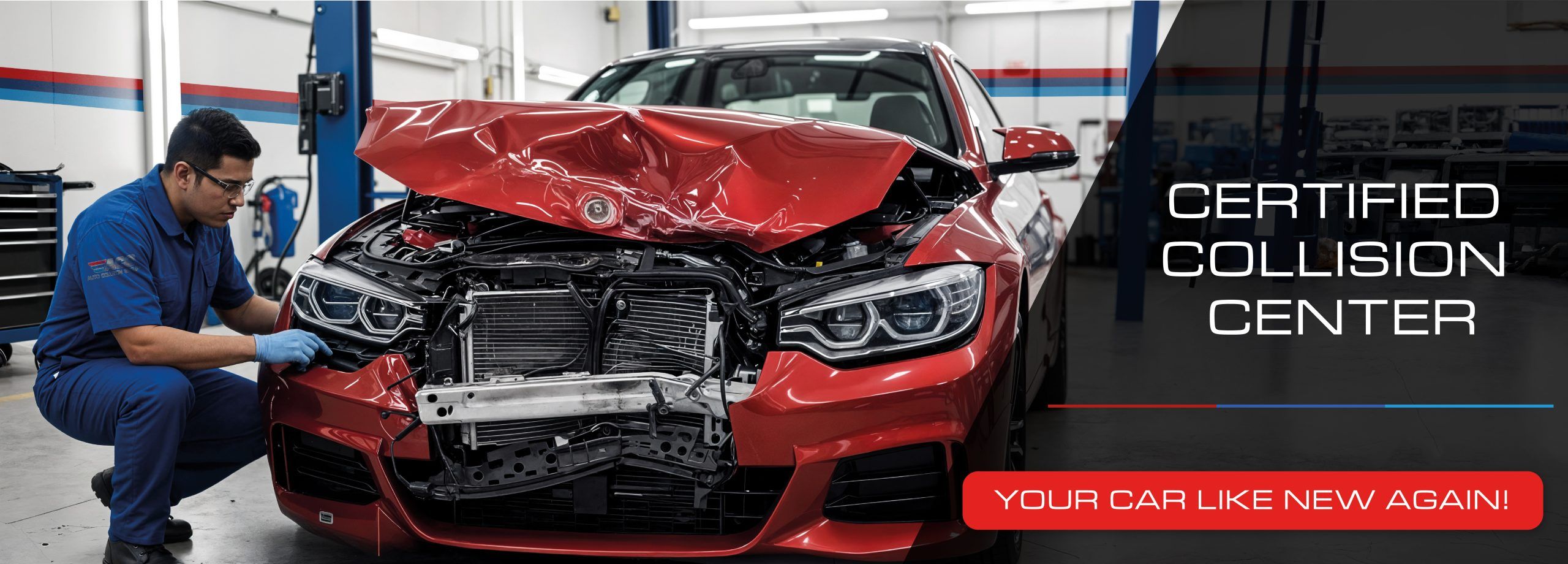
CERTIFIED COLLISION CENTER
What To Do After a Car Accident in California
A car accident in California means you have the right to choose your own body shop, not accept the insurance company’s preferred repair facility. California law AB 1688 guarantees you control over where your car gets repaired and what parts go back on it. The first 24 hours after an accident matter most; how you document the scene, report to police, and protect your claim determines whether you’ll get your car fixed right with OEM parts or pressured into a discount shop using aftermarket components. Auto Collision Group handles everything with your insurer so you don’t have to fight them alone.
Immediate Steps After Your Accident: First 24 Hours
The moments right after a crash determine what evidence survives. First, move to safety if possible; if you’re injured or vehicles are blocking traffic, call 911 immediately. Once safe, turn on your hazard lights and document everything with your phone. Take photos from multiple angles of all vehicle damage, the accident scene, road conditions, traffic signs, and any debris. Get the other driver’s name, phone number, address, driver’s license number, license plate, vehicle make and model, insurance company, and policy number. Do the same for any witnesses; their contact information becomes critical if the claim is contested. Call the non-emergency police line if no injuries occurred; for accidents with injuries, paramedics will call police. Get the police report number before leaving the scene. Report the accident to your insurance company within 24 hours, but don’t accept their recommended repair shop or agree to specific repair terms yet.
Your Right To Choose Your Own Body Shop in California
California law AB 1688 gives you absolute power over repair location. Your insurance company cannot force you to use their Directly Repaired Program (DRP) shop, and they cannot penalize you for choosing an independent or certified facility. When your insurer contacts you, tell them clearly: “I choose my own body shop.” Do not let them pressure you into their preferred network. Insurance companies use DRP shops because they’ve negotiated lower labor rates and agreed to use cheaper aftermarket parts, which saves the insurer money but leaves you with an inferior repair. You paid your premiums to get your car fixed right, not to pad the insurance company’s profit margins. California courts have consistently ruled that policyholders retain shop selection rights regardless of what the policy document says. The insurer must pay for repairs at your chosen facility as long as it’s qualified and certified.

Why Insurance Preferred Shops Work Against You
Directly Repaired Program shops exist because insurers negotiate volume discounts with them. In exchange for sending them hundreds of claims per year, these shops agree to use aftermarket parts instead of OEM, cut labor time estimates, and prioritize getting cars back out fast over getting them fixed right. Aftermarket parts cost 30 to 50 percent less than OEM parts but fail at higher rates, don’t fit as precisely, and reduce resale value. If your Tesla gets hit, a DRP shop will use an aftermarket bumper cover instead of the Tesla OEM part your car needs for proper sensor alignment and safety. A Mercedes collision will get a generic replacement fender instead of a Mercedes fender engineered for that model’s aerodynamics and paint match. You don’t see the difference on day one, but in six months when the part rusts faster or doesn’t align correctly, you’re stuck paying out of pocket. Insurance companies count on you not knowing this happens.
How To File Your Claim The Right Way
When you call your insurance company, have your policy number ready and speak clearly about what happened, but don’t over-explain. Say: “I was in an accident on [date] at [location]. A police report was filed [number]. I have photos and the other driver’s information. I want to file a claim and choose my own repair shop.” Stop there. Don’t answer questions like “Do you think you were at fault?” or “Do you think you need major repairs?” Let the adjuster ask specific questions and answer only those. Email everything after the call: photos from the scene, photos of your insurance card and policy, the police report number, the other driver’s contact info, and contact info for any witnesses. Write a brief email: “Per our call on [date], attaching documentation for claim [number]. Please confirm receipt.” This creates a paper trail proving you reported promptly and provided full documentation. Never agree to repair estimates from their shops during the first call. Tell them you’ll contact them with your shop choice within 2 business days.
OEM Parts vs Aftermarket: What Your Claim Requires
Original Equipment Manufacturer (OEM) parts are made by your car’s manufacturer and engineered to your exact vehicle specifications. Aftermarket parts are made by third-party suppliers and designed to fit multiple models or model ranges with less precision. For luxury vehicles like Tesla, Lucid, Mercedes, BMW, and Porsche, OEM parts are non-negotiable; these cars have complex sensor networks, aerodynamic designs, and materials that aftermarket parts simply cannot replicate. A Tesla collision repair needs OEM aluminum body panels because the vehicle’s structural integrity and weight distribution depend on it. A Mercedes bumper needs OEM components because aftermarket bumpers don’t house the correct sensor brackets for parking assist and collision avoidance systems. Your insurance company must cover OEM parts without question; California law requires repairs to return your vehicle to pre-accident condition. If an adjuster tells you “We only cover aftermarket,” they’re breaking the law. Your shop should push back on this in writing to the insurer, and if they don’t, you need a shop that will.
How Auto Collision Group Fights For You, Not The Insurance Company
Auto Collision Group operates 13 certified facilities across California with 34+ manufacturer certifications including Tesla, Lucid, Mercedes, BMW, Porsche, and all major brands. We use OEM parts exclusively on every repair, which means your vehicle leaves our shop exactly as the manufacturer intended. When you choose ACG, we become your advocate; our estimates are detailed line-by-line with OEM part specifications, and if your insurance company tries to deny coverage or push for aftermarket parts, we fight that denial in writing. We’ve handled thousands of claims and know every tactic insurers use to reduce payouts. We document everything, appeal denied coverage, and push back on underbid estimates. You don’t negotiate with your insurer; we do that while you get a free loaner vehicle or rental assistance. We guarantee every repair with a lifetime warranty, so if a part fails in year three, we fix it free. You get a free estimate, free 24/7 towing from anywhere in California, and we handle all the paperwork so you can focus on getting your life back to normal.
Free 24/7 Towing Anywhere in California
After a collision, your car might not be drivable, and paying for a tow truck adds stress on top of the accident itself. Auto Collision Group provides free towing 24 hours a day, 7 days a week to any of our 13 locations throughout California. Call 833-333-4224 anytime, day or night, and our dispatch team gets a truck to you within the hour in most areas. We tow from accident scenes, from the other insurance company’s preferred shop if you need to move your car, from your home, from the roadside, or anywhere else you need recovery. You never pay a dime for this service; it’s included when you choose ACG for repairs. We use heavy-duty flatbed trucks that prevent further damage during transport, and our drivers are trained to protect your vehicle throughout the towing process. For customers in remote areas like Victorville, Fresno, or Bakersfield, we’ve got coverage everywhere. The tow goes straight to whichever ACG location is closest to you or serves your area, so you’re never stranded deciding what to do next.
Getting Your Car Repaired Without The Insurance Company Headaches
The entire claim process moves smoother when you start with a certified shop instead of an insurance-preferred location. Call Auto Collision Group first with your accident details, and we’ll give you a free estimate on the spot without obligation. Our estimate covers all damage visible and probable based on impact type and vehicle specifications. We submit the estimate to your insurance company; if they want to negotiate labor rates or deny parts coverage, that conversation happens between us and them, not you playing messenger between two companies. We handle all supplement requests if hidden damage appears during repair (common in collisions where initial impact assessment misses structural damage). Your insurance company approves the scope of work, and we execute it with OEM parts and certified technicians. Repairs take anywhere from three days to three weeks depending on damage severity and parts availability; we update you every two days with progress photos. You drive away with a lifetime warranty and a vehicle restored to factory specifications, not a discounted repair job that’ll cause problems in six months.
Frequently Asked Questions
Find answers to the most common questions people have after a car accident in California.
[toggle title=”Can my insurance company force me to use their preferred body shop?”]
No. California law AB 1688 prohibits insurers from forcing you to use Directly Repaired Program shops or penalizing you for choosing an independent or certified facility. You have absolute shop selection rights. If your insurer pressures you, tell them you’re choosing your own shop and document their pressure in writing.
[/toggle] [toggle title=”What if the insurance company refuses to pay for OEM parts?”]Insurers must cover OEM parts to restore your vehicle to pre-accident condition; this is California law. If they deny OEM coverage, your repair shop should appeal in writing with documentation of why OEM parts are required for that specific vehicle and component. Persistent denials may require consulting an attorney.
[/toggle] [toggle title=”How much will my insurance claim increase my premiums?”]This depends on your policy and whether you’re found at fault. Most California policies don’t increase rates for not-at-fault claims. At-fault claims typically increase rates for three to five years, but amounts vary by insurer and coverage level. Your agent can explain your specific situation after the claim is filed.
[/toggle] [toggle title=”Can I get a rental car or loaner while my car is being repaired?”]Yes. Most insurance policies include rental car coverage (usually $30-50 per day). If the other driver is at fault, their liability coverage pays for your rental. Auto Collision Group provides complimentary loaner vehicles and rental assistance, so ask about this when you call.
[/toggle] [toggle title=”How long does a typical collision repair take?”]Minor dents and bumper damage take 3-5 days. Frame damage, major structural repairs, and parts ordering can take 2-4 weeks. Auto Collision Group updates you every two days with progress photos so you know exactly where your repair stands.
[/toggle]We Fight For You. Not The Insurance Company.